Spreadsheet template
Inspection schedule planner.
A spreadsheet for planning preventative maintenance inspections across a fleet for the year, so intervals are set deliberately and gaps are visible before they open.
This is the spreadsheet you keep yourself. FleetOptix does the same job against live records, and raises the alert without anyone opening a file.
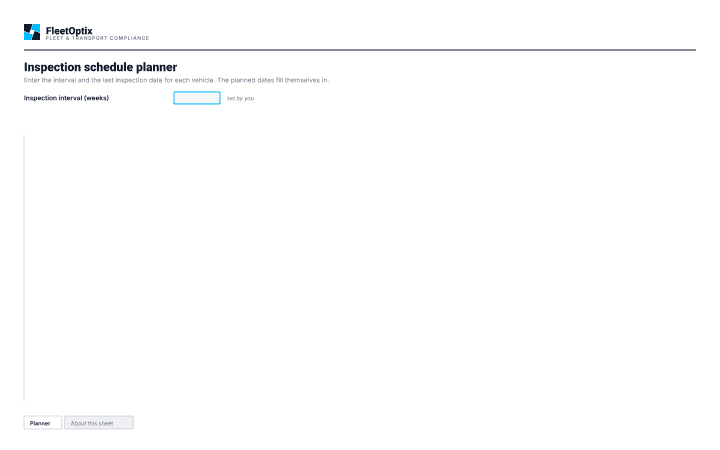
What is on the sheet
- A row per vehicle and thirteen inspection columns, across a full year
- Your interval entered once, with every inspection date calculated from it
- Annual test and other fixed dates alongside, so they are planned around
- Any vehicle with no interval or no last inspection highlighted, so a gap shows itself
Why this record matters
An inspection interval is something an operator sets and has to be able to justify — against the vehicle's age and condition, the work it does, the mileage it covers and the operating conditions it does it in. The planner is where that justification becomes a schedule rather than an intention.
The value of planning a year ahead is that it exposes the drift. A fleet working inspection to inspection rarely notices an interval quietly stretching; a planner shows the stretch as a widening gap on a row, while there is still time to pull it back.
Use it with
- PMI safety inspection sheetA preventative maintenance inspection sheet recording the safety-critical items checked, the measurements taken and the declaration that the vehicle is roadworthy.
- DVSA maintenance investigation prepA preparation checklist for a DVSA maintenance investigation, covering the records to assemble, the period they should span and the gaps worth finding first.
- Roadworthiness guide summary checklistA summary checklist drawn from the Guide to Maintaining Roadworthiness, for operators auditing their own maintenance arrangements against it.
Read more on this
© 2026 FleetOptix. Free to print, copy and use in your business. Not for resale. Please keep this notice.
Contains public sector information licensed under the Open Government Licence v3.0. General guidance, not legal advice. Checked October 2026.